 News Home
 {{blogcategory.sCategoryName}}
Recent posts

Constructive Criticism
How To Practice Sustainable Water Usage at Home
27 March 2026

Doctors Orders
What To Do When Your Denture Breaks?
25 March 2026

Get Court
Can a Rideshare Passenger Sue Both the Driver and the Company?
16 March 2026

Alarming
Vendor Risk Management Solutions: Protecting Your Business in the Digital Age
15 March 2026
Popular posts
Extravaganza
Trending Music Hashtags To Get Your Posts Noticed
24 August 2018
Geek Chic
How To Fix iPhone/iPad Only Charging In Certain Positions
05 July 2020
Extravaganza
Trending Wedding Hashtags To Get Your Posts Noticed
18 September 2018
Money Talks
How To Find Coupons & Vouchers Online In South Africa
28 March 2019
The Impact of Trading on the Global Economy
12 January 2024 | 0 comments | Posted by Kristina Rodopska in Money Talks
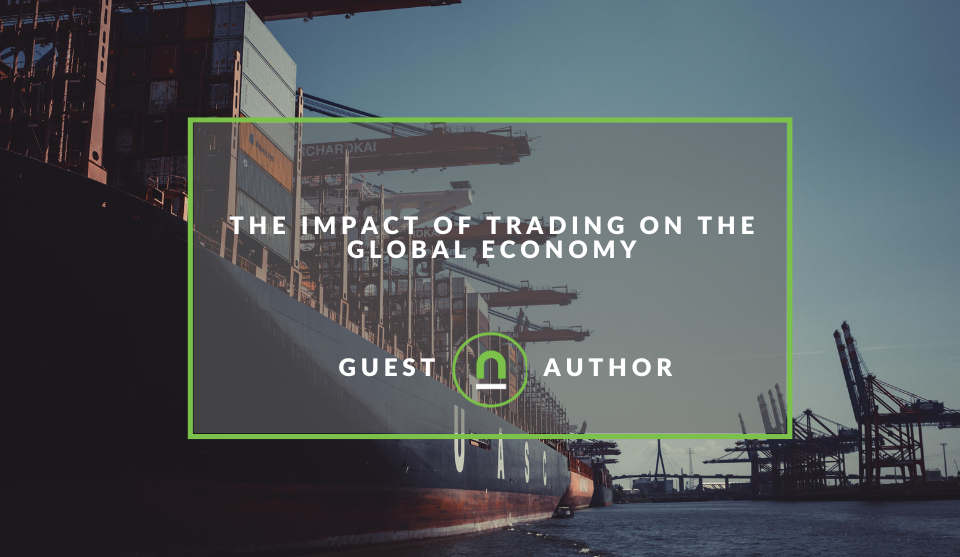
Trading is the engine that powers the global economy. As countries and companies buy and sell goods and services across borders, trade interconnects the world's economies more tightly than ever before.
In the last few decades, advances in transportation, communication, and technology have led to booming international trade volumes and increasing economic integration; we've come to know this period as "globalisation".
Globalisation really began to show its impact in the post-Cold War era as more countries started to open up to trade with one another, with the majority of trade settled in dollars. The US provided the financial rails for trade to happen along with security on shipping lanes.
These global shipping lanes started to connect more countries, become more efficient, and haul goods from commodities, like wheat, soybeans, oil and precious metals, to finished goods. The ability to move resources to the cheapest manufacturing basis has driven rapid deflation, and we've seen the cost to produce goods plummet over time in real terms.
This has had profound impacts – both positive and negative – on jobs, wages, prices, innovation, and nearly every facet of the global economy.
International Trade as a Share Of Global GDP
One of the most visible impacts has been the dramatic expansion of international trade as a share of global GDP. Since 1990, worldwide merchandise exports have tripled in real terms, reaching over $19 trillion in 2018.
When combined with commercial services trade, the total value of international trade now exceeds $25 trillion annually, amounting to nearly 60% of global economic output. Much of this trade growth has occurred between developed and emerging market countries, binding their economies more closely together.
These deepening economic connections have allowed for greater specialisation and efficiencies gained through comparative advantage. They have also enabled faster diffusion of knowledge and technologies across borders.
The Explosive Growth of Global Trade Flows
Rapid trade growth has created economic opportunities and boosted average living standards around the world. However, its impacts have not been uniformly distributed within countries.
Sectors and regions that are highly exposed to import competition have endured economic pain and job losses in some cases, even as export-oriented industries have thrived.
Additionally, low-skill manufacturing workers in developed countries have faced downward pressure on wages due to competition from abundant low-cost labour abroad.
This has contributed to rising income inequality in nations like the US, for example. While mostly benefiting consumers via lower prices, the 'China trade shock' of the early 2000s also led to sharp declines in manufacturing employment.
International Trade Also Affects Price Levels and Inflation
Besides influencing incomes and employment, international trade also affects price levels and inflation. By facilitating access to cheaper goods and services from global markets, trade openness helps reduce costs and price pressures in countries' domestic economies.
Due to the offshoring of production to low-cost countries, price markups over marginal costs have declined in many industrialised nations over the past decades.
However, inflation rates have at times spiked in emerging markets as rising wages and strong capital inflows fueled high import demand. Ultimately, through trade, price shocks in some countries propagate internationally across supply chains.
Innovation and Technology Adoption
Innovation and technology adoption are also tied to trading connections, as ideas and new products readily flow across borders. Access to fast-developing markets abroad provides incentives for companies to invest more in R&D to stay on the competitive cutting edge.
Exporting firms, especially in sophisticated manufacturing industries, tend to be more productive due to knowledge and technology diffusion through global value chains.
These positive impacts on innovation and productivity growth from trade have been vital to improving standards of living across the world. However, increased global IP protections and international patent filing activity have raised concerns over impeded technology transfer to developing countries.
Technology has also made international trading for individuals much easier. With a CFD account, for example, traders from one country can speculate on the price movements of underlying assets like forex, commodities, stocks, and indices in a different country without actually owning those assets.
Winners and Losers from Trade Integration
Trade interdependence also increasingly binds countries together financially, as cross-border capital flows and investments closely track trade relationships.
Yet volatile short-term portfolio investments often destabilise emerging market economies during economic or political crises.
The expansion of trade has also exacerbated other risks related to global public health, climate change, and geopolitical conflicts. Negative trade-related externalities pose greater dangers today due to the world's interconnectedness through trade.
Promise and Perils of Interconnected Economies
In many ways, trading connections have made individual economies more resilient by allowing countries to access larger markets for goods, capital, and labour.
But relying on complex supply chains leaves you open to economic shocks that now reverberate more widely as well. The global synchronised slowdown of 2019 demonstrated how weakened trade flows transmit economic weakness across multiple countries simultaneously.
As witnessed during the COVID crisis and the latest regional wars in Europe and the Middle East, global supply chain disruptions also cascade through economies when trade is severely curtailed. For better or worse, the world's economic fate is more intertwined due to high levels of international trade and investment flows.
Sustaining Open Trading Ties
Nearly 75 years ago, the Bretton Woods conference laid the foundations of the modern international economic architecture that has promoted rising prosperity via trade. That rules-based global trading system is now under threat due to protectionist policies and heightened geopolitical tensions.
As history has repeatedly shown, a breakdown in open trading relationships severely damaged employment, productivity, innovation, and living standards the last time it occurred in the 1930s.
Despite the current geopolitical unrest and the rise of a multi-polar world with the emergence of BRICS+, the obvious incentives of global trade cannot be ignored, as any economy cutting itself off from this market will see a rapid decline in its standard of living.
While there might be unrest, experts in the import and export field predict trading volumes are projected to grow in the years ahead, strengthening multilateral cooperation and mitigating the negative side effects of globalisation remain imperative for sustaining global economic health.
Diving into the numbers, Statista states that Global trade amounts to 24 trillion US dollars in value, with it predicted to shrink in the near term by 1.5 trillion. However, According to Standard Chartered, Global trade is set to grow by 70% to an annual settlement of 30 trillion US dollars by the end of this decade, with a shift towards more inclusive and sustainable practices.
Ultimately, sound international policies and institutions that support trade will prove critical to raising prosperous living standards worldwide.
Tell us your story.
Would you like to write for nichemarket just like Kristina has? Find out how to submit a guest post, and when you're ready, you can contact us.
Do you need financial help?
Find a financial advisor or financial consultant in your area
Get started with nichemarket
If you are a financial adviser and would like more leads, why not list your business with nichemarket. Registering with nichemarket is easy; all you will need is head over to our sign up form and follow the instructions. If you require a more detailed guide on how to create your profile or your listing, then we highly recommend you check out the following articles.
Recommended reading
If you enjoyed this post and have the time to spend diving deeper down the rabbit hole, then we suggest you check out the following posts about improving your finances in South Africa.
- How South Africans Can Save Money Each Month
- The Pros and Cons Of Tap and Go Cards
- What Is A Money Market Account?
- Ways To Earn Cryptocurrency
- How To Passively Earn Cryptocurrency
- Types Of Cryptocurrency Exchanges
- How South Africans Can Buy Bitcoin
Disclaimer: This is not investment advice and is for informational purposes only. nichemarket cannot be held liable for any investment decisions made based on the information given by independent financial service providers. Under the ECT Act and to the fullest extent possible under the applicable law, nichemarket disclaims all responsibility or liability for any damages whatsoever resulting from the use of this site in any manner.
You might also like

Rehab Your Knee: A Free, Evidence-Based Guide to Smarter Recovery
12 February 2026
Posted by Shamima Ahmed in Press Releases
Dhansay & Roberts launches Rehab Your Knee, a free ebook with evidence-based advice to help anyone recovering from a knee injury regain strength safe...
Read moreCan a Rideshare Passenger Sue Both the Driver and the Company?
16 March 2026
Posted by Tod Mailcoat in Get Court
A look at some of the legal cases that have made headlines in the ride share market and when you might have a legal case against the company or the d...
Read more
{{comment.sUserName}}
{{comment.iDayLastEdit}} day ago
{{comment.iDayLastEdit}} days ago