 News Home
 {{blogcategory.sCategoryName}}
Recent posts
Hit the Road
How to Rent a Car in Dubai Without Paying a Security Deposit
06 October 2026
Hit the Road
A Travel Guide to Renting and Driving in Morocco's Biggest City
06 October 2026

Press Releases
As Gold Prices Hit Record Highs, LoanAgainst Offers South Africans a Way to Unlock Cash Without Selling Their Gold
29 September 2026
Money Talks
How DXY CFD Trading Works Without Owning Six Currencies
28 September 2026
Popular posts
Extravaganza
Trending Music Hashtags To Get Your Posts Noticed
24 August 2018
Geek Chic
How To Fix iPhone/iPad Only Charging In Certain Positions
05 July 2020
Extravaganza
Trending Wedding Hashtags To Get Your Posts Noticed
18 September 2018
Money Talks
How To Find Coupons & Vouchers Online In South Africa
28 March 2019
A Travel Guide to Renting and Driving in Morocco's Biggest City
06 October 2026 | 0 comments | Posted by Abdulhafeez Yusuf in Hit the Road
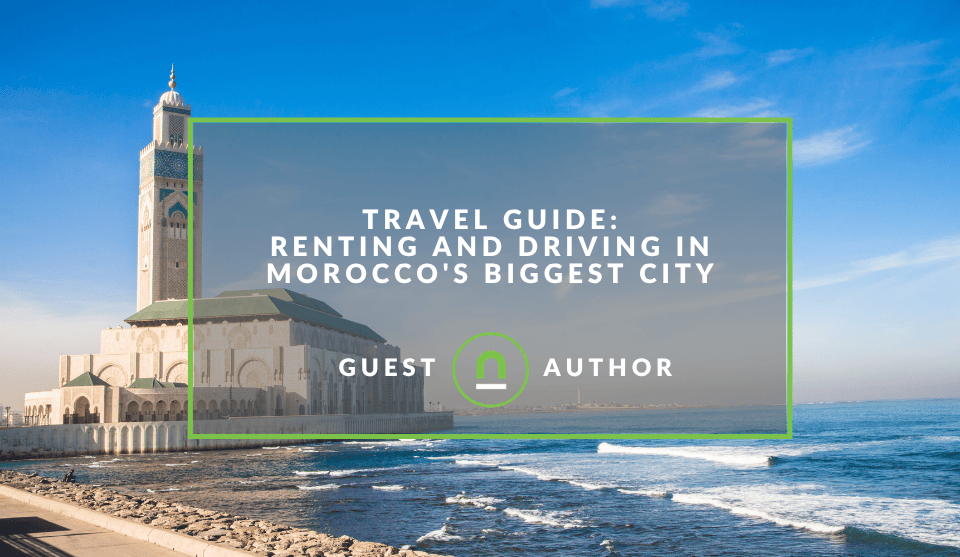
Casablanca is where most journeys into Morocco begin, and it is the city most visitors misunderstand on arrival. It is not Marrakech's postcard or Fes's labyrinth; it is the country's working heart, a sprawling Atlantic metropolis of business towers, Art Deco boulevards, and the magnificent Hassan II Mosque standing over the ocean. Its treasures are real but scattered, its distances are genuinely urban, and its greatest gift to the traveller is geographic: from here, the autoroutes fan out to Rabat, Marrakech, El Jadida, and the whole Atlantic coast. All of which makes Casablanca less a walking city than a driving base, and the rental decision one of the first and best a Morocco trip can make.
The market is ready for it and priced kindly. Visitors renting a car in Casablanca pay from around 200 to 350 dirhams per day for city cars and economy models, with compact SUVs from roughly 400 dirhams and the fleet scaling through family cars to 4x4s for Atlas ambitions. Pickup points cover the arrival gates, Mohammed V airport about thirty kilometres south of the centre, the Casa Voyageurs train station, and downtown offices, and one-way rentals to Marrakech, Tangier, or Agadir are widely available for a fee, which unlocks the classic drive-through-Morocco itinerary from its most convenient starting line.
This guide covers the local craft in the order the trip meets it: the car and terms, the city's famous traffic, and the roads that make the keys worthwhile.
Choosing the Car and Reading the Terms
The Casablanca fleet mirrors the national one, which means small and sensible dominates. Dacias, Clios, and their cousins fill the economy tier and suit most trips perfectly, since city parking rewards the compact and the autoroutes ask little of an engine. The specification to confirm before anything else is the gearbox: manual is the Moroccan default, automatics exist in smaller numbers at a premium, and drivers who need one should say so in the first message rather than discover the shortage at the counter. Families and mountain-bound travellers step up to SUVs, and business visitors will find the executive tier better stocked here than anywhere else in the country, this being the city where Morocco does its deals.
The terms follow patterns worth knowing about the cold. Collision damage and theft cover is commonly included, with an excess that remains your responsibility; that excess figure, plus any reduction option, is the number to request by name. Mileage splits between capped and unlimited offers, so match the allowance to your route ambitions, and confirm the fuel policy, deposit arrangement, and any young-driver or additional-driver fees in writing. At handover, walk the car slowly and film every existing mark, since Moroccan city cars wear their lives honestly and the documentation protects both sides, and check the spare wheel, warning triangle, and reflective vest, which the car is expected to carry. Paperwork is light: a home-country licence held for at least a year, an International Driving Permit recommended and occasionally requested, a passport, and a card for the deposit, with minimum ages typically from 21 and occasional surcharges under 25.
Driving Casablanca Without Losing Your Nerve
Honesty serves better than cheerleading here: Casablanca traffic is the most assertive in Morocco, and the first hour takes adjustment. Once learned, the grammar is consistent. Roundabouts run on confidence and eye contact, lane markings are treated as suggestions at rush hour, petit taxis and scooters thread everywhere, and the right response is calm predictability: steady speed, clear signals, and no sudden hesitation. Mornings and late afternoons clog the centre, so sightseeing drives slot best into mid-morning and early afternoon, and the city's size means the car earns its keep precisely on the days the itinerary crosses town, mosque to Corniche to Habous quarter, which no comfortable walk connects.
Parking runs on the national two-system model: marked blue zones with small hourly fees, and the informal spots watched by vested guardians who, for a few dirhams, guide you in, watch the car, and see you out, a custom to embrace with a pocket of coins. Fuel stations are frequent and full-service; tolls on the autoroutes take cash at modest rates, and the radar and checkpoint culture rewards exactly what it rewards everywhere in the country: posted speeds, documents within reach, and politeness as the entire transaction. Two closing rules complete the local knowledge: skip unfamiliar rural roads after dark, and when visiting the old medina or the densest downtown blocks, park at the edges and walk in, as every Casablancais does.
The Roads That Justify the Rental
Day one belongs to the city itself and needs the car more than visitors expect. The Hassan II Mosque, one of the great buildings of the modern world, anchors the morning; the drive along the Corniche at Ain Diab delivers the Atlantic afternoon, café terraces and ocean light; and the Habous quarter and the Art Deco centre fill the gaps between with the city's two contrasting faces. None of these sits within a pleasant walk of the others, which is the entire argument for the keys.
Casablanca's geography pays off on day trips. Rabat, the serene capital, is barely an hour north by autoroute, its Kasbah of the Udayas and Hassan Tower making the easiest excellent day in the country. El Jadida's Portuguese cistern and ramparts sit an hour south along the coast, with the oyster lagoons of Oualidia another hour beyond for the long version. Marrakech runs about two and a half hours down the A7, feasible as a day trip and better as the next base, which is where the one-way rental earns its fee: collect in Casablanca, tour the coast, drop in Marrakech, and let the train or a flight close the loop. Every route in this section runs on smooth, tolled, well-signed autoroute or coastal tarmac, comfortably inside a standard agreement, with only the mileage terms worth measuring against the plan.
Booking It the Smart Way
The comparison habit works in Morocco exactly as it works everywhere, with one local upgrade that first-time visitors should use. Browsing the options for car rental across Morocco on OneClickDrive puts verified suppliers in Casablanca and the other major cities, Marrakech, Tangier, Rabat, Agadir, Fes, and beyond, on one screen with real cars and transparent dirham pricing, and the booking runs on an assisted model built for travellers who want certainty before landing: the team confirms the right supplier and car for your dates, a small advance of around ten percent secures the reservation through OneClickDrive, and the balance settles directly with the supplier at pickup, keys waiting at the airport, the station, or the hotel. For anyone nervous about the automatic-gearbox shortage, the excess terms, or airport handover timing, having a coordinator lock those details in advance removes precisely the frictions that arrival-hall counters are famous for.
Whichever route the booking takes, the protective habits never change: terms in writing, the walkaround filmed, the excess known, coins in the pocket for guardians and tolls, and the tank returned as received.
What the rental finally delivers is the version of Morocco that Casablanca quietly advertises: a country built for the road trip, with this city as its on-ramp. The mosque at nine, the Corniche at noon, Rabat's ramparts by late afternoon, and the A7 south waiting whenever the itinerary says Marrakech, all of it from 200 dirhams a day and a WhatsApp confirmation before the flight even boards. Casablanca may not be Morocco's postcard, but it is unquestionably its steering wheel, and SmartTrips grabs it with both hands.
Tell us your story
Got a story worth sharing? Find out how to submit a guest post, and when you're ready, get in touch with us.
Looking to promote your business?
Get your business featured alongside other local and international brands in our Global Travel Businesses Directory by creating a free business listing on nichemarket.
Getting started is simple. Head to our sign-up form and follow the prompts. For a more detailed walkthrough, check out these guides:
The more information you provide, the easier it is for customers to find you online.
Recommended Reading:
If you enjoyed this post and have a little extra time, why not dive into more articles on Travel?
- Your eSIM says "Installed", but you still have no internet.
- 5 Helpful Travel Planning Tips for Complete Peace of Mind
- Tips For Travelling Alone For The First Time
- The Ultimate Beginner's Guide To Travel
Tags: travel tips, morocco travel tips, morocco, morocco car hire, morocco road trip, Casablanca
You might also like
What Is Google's Preferred Source Button?
27 September 2026
Posted by Che Kohler in nichemarket Advice
Preferred Source is a widget that publishers can embed on their websites allowing readers to add a site to their personal preferred sources on Google...
Read moreAs Gold Prices Hit Record Highs, LoanAgainst Offers South Africans a Way to Unlock Cash Without Selling Their Gold
29 September 2026
Posted by Lamna Group - Staff Writer in Press Releases
As gold prices hit record highs, LoanAgainst offers secured loans against gold jewellery and coins, so you keep the asset and the upside.
Read more
{{comment.sUserName}}
{{comment.iDayLastEdit}} day ago
{{comment.iDayLastEdit}} days ago