 News Home
 {{blogcategory.sCategoryName}}
Recent posts
Constructive Criticism
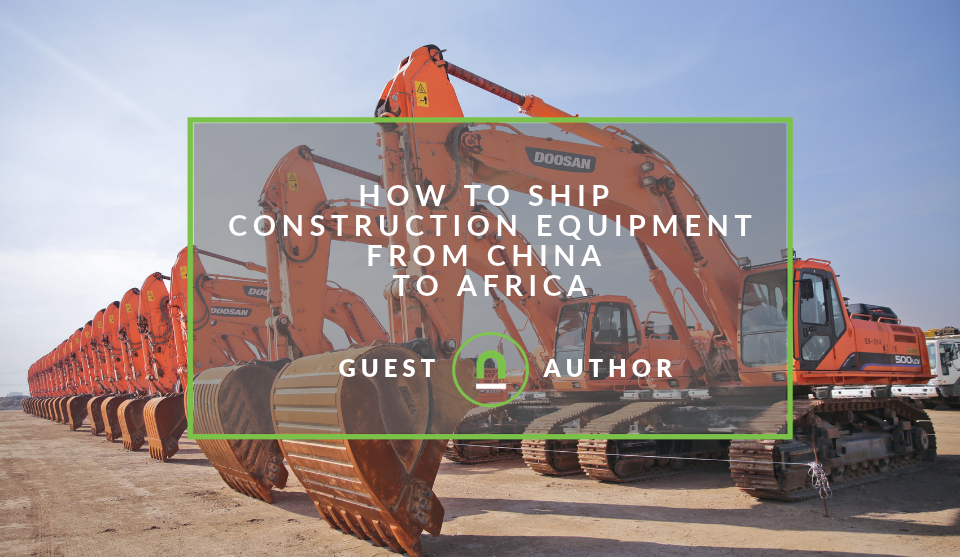
How to Ship Construction Equipment from China to Africa
29 October 2026

Industry Experts
How to Promote Your YouTube Channel Without Spamming
28 October 2026

Money Talks
How to Find a Financial Solution That Matches Your Lifestyle
23 October 2026

Doctors Orders
How Do You Clean a CPAP Machine Properly at Home?
22 October 2026
Popular posts
Extravaganza
Trending Music Hashtags To Get Your Posts Noticed
24 August 2018
Geek Chic
How To Fix iPhone/iPad Only Charging In Certain Positions
05 July 2020
Extravaganza
Trending Wedding Hashtags To Get Your Posts Noticed
18 September 2018
Money Talks
How To Find Coupons & Vouchers Online In South Africa
28 March 2019
How to Ship Construction Equipment from China to Africa
29 October 2026 | 0 comments | Posted by Hailey Yu in Constructive Criticism
Buying an excavator, wheel loader, or crane from China can be a significant investment for an African construction business. But getting the machine from the supplier's factory to a construction site overseas requires careful planning.
Construction equipment comes in different sizes, weights, and configurations. A compact excavator may fit inside a shipping container, while a large crawler crane could require specialised lifting equipment and a breakbulk vessel.
For African importers, equipment dealers, and contractors, understanding the shipping process before placing an order can help prevent unexpected costs, cargo damage, and delivery delays.
Here's what to consider when arranging construction machinery shipping from China to Africa.
1. Choose the Right Shipping Method for Your Equipment
The first decision is how the equipment will be transported by sea. Four methods are commonly considered.
Roll-on/Roll-off (RoRo) Shipping
RoRo vessels are designed to carry wheeled and other suitable mobile cargo. Wheel loaders, motor graders, truck cranes, and some tracked machines may be accepted if they meet the carrier's operational and loading requirements.
Where suitable services are available, RoRo allows machinery to be driven or moved onto the vessel without container packing.
Breakbulk Shipping
Breakbulk shipping is used for machinery that requires individual handling and securing on board.
Large excavators, cranes, and oversized construction equipment may be transported as breakbulk cargo when conventional container arrangements are impractical.
The equipment is generally lifted onto the vessel using suitable cranes and secured according to an approved loading plan.
Flat Rack Containers
Flat rack containers have no fixed side walls or roof, making them suitable for some oversized machines.
They are often considered for excavators, bulldozers, and equipment that exceeds standard container dimensions.
However, the machine must still comply with the flat rack's weight limits, load distribution requirements, and the shipping line's acceptance conditions.
Standard Containers
Smaller machines, detachable attachments, and spare parts may fit into standard shipping containers.
Some compact excavators can also be containerised after suitable preparation or partial dismantling.
The best method depends on the machine's actual shipping dimensions, weight, running condition, available routes, and total handling cost.
2. Confirm the Machine's Shipping Dimensions
One common mistake is requesting a freight quotation using only the equipment model.
A manufacturer's published dimensions may not reflect the machine's actual shipping condition.
For example, an excavator's boom and bucket may need repositioning. A crane may require detachable components or counterweights to be shipped separately.
Before contacting a freight forwarder, obtain:
- Equipment type, manufacturer, and model
- Length, width, and height in shipping condition
- Gross weight, including attached components
- Number and dimensions of separate attachments
- Running condition and loading capability
- Photographs showing the machine and its identification plate
For heavy or unusual cargo, technical drawings, lifting points, and centre-of-gravity information may also be required.
Accurate measurements allow the shipping company to assess vessel space, lifting arrangements, and whether the machinery can be transported intact.
3. Prepare the Equipment Before It Leaves the Factory
Construction machinery often requires preparation before it can be delivered to a Chinese port.
Working arms, buckets, blades, and other movable parts should be placed in a suitable transport position. Loose accessories must be secured, and detachable components may need separate packing.
The machine should also be inspected for fluid leaks, visible damage, and mechanical problems.
Fuel quantities, batteries, and other potentially hazardous components must comply with the carrier's acceptance requirements. Used equipment may require additional cleaning to remove accumulated soil and debris.
The inland journey from the factory to the port also needs planning.
A large excavator may require a low-bed trailer, while oversized equipment can be subject to road transport restrictions, route surveys, or special permits.
Cargo securing is equally important during sea transportation.
The International Maritime Organization's Code of Safe Practice for Cargo Stowage and Securing provides guidance on safe stowage and securing arrangements for cargo carried aboard ships.
For containerised machinery, the IMO/ILO/UNECE CTU Code provides additional guidance on packing and securing cargo transport units.
Preparation should be completed before the equipment reaches the terminal, rather than leaving major adjustments until the loading date.
4. Compare the Total Shipping Cost
Ocean freight is only one part of the cost of importing machinery.
The final transportation expense depends on the equipment's dimensions, weight, shipping method, destination, and handling requirements.
For example, breakbulk freight may be calculated using weight or measurement, or quoted on a lump-sum basis. Flat rack shipping can involve additional charges for out-of-gauge cargo, special handling, and securing.
Importers should request quotations that clearly identify the following expenses:
- Factory pickup and inland transportation in China
- Export customs declaration and origin port charges
- Loading, lifting, and cargo securing
- Ocean freight and applicable surcharges
- Marine cargo insurance
- Destination terminal handling and discharge
- Import clearance and inland delivery
Not every quotation includes all these services.
A lower ocean freight rate may come with higher handling charges or less convenient delivery arrangements. Comparing the complete cost is more useful than comparing freight rates alone.
Buyers should also confirm the agreed Incoterms rule to understand which costs and responsibilities belong to the seller and which belong to the importer.
5. Check Import Requirements in Your Destination Country
Africa does not have a single set of customs rules for construction machinery.
Import requirements vary by country, equipment classification, and whether the machine is new or used.
South African importers, for example, need to pay particular attention to second-hand machinery.
According to the International Trade Administration Commission of South Africa (ITAC), used and second-hand goods are subject to import control, and import permits are required.
Importers should establish the applicable permit requirements before shipping used construction equipment to South Africa.
The South African Revenue Service (SARS) also requires customs declarations supported by the relevant commercial and shipping documents.
Other African countries may have different inspection, conformity assessment, import licensing, and tax requirements.
Before confirming a machinery purchase, buyers should check:
- Whether the equipment can legally be imported
- The applicable HS tariff classification
- Import duties, VAT, and other taxes
- Inspection or conformity certification requirements
- Additional rules for used machinery
- Customs documentation required at the destination
These checks are particularly important when purchasing second-hand excavators, loaders, or other equipment from overseas suppliers.
An attractive purchase price can become considerably less attractive if the machine cannot be cleared or must remain in port while missing permits are obtained.
6. Plan the Shipment from China to the Final Destination
A construction machine's journey rarely ends when the vessel arrives at an African port.
Equipment destined for South Africa may enter through Durban, while shipments to other markets may use ports such as Mombasa in Kenya or Tema in Ghana, depending on the route and available shipping services.
The appropriate port is not always the one geographically closest to the construction site.
Vessel availability, terminal lifting facilities, customs procedures, inland road conditions, and the availability of heavy-haul transport must also be considered.
For example, a large excavator delivered to a port may still require specialised trucking to reach an inland construction project. Its height and weight could limit the roads or bridges available along the route.
This makes it important to coordinate factory pickup, ocean transport, port operations, and final delivery before confirming the shipment.
Freight forwarders experienced in moving heavy machinery from China, such as Sinotraffic, can help assess shipping methods, cargo preparation, terminal handling, and transport arrangements for construction equipment.
Importers should also confirm who is responsible for each stage of the shipment, particularly when working with multiple logistics providers.
7. Request a Detailed Shipping Quotation Before Purchasing
The most useful time to assess transportation costs is before finalising the equipment purchase.
A detailed freight quotation requires more than the name of the machine and the destination country.
Buyers should provide the exact equipment model, shipping dimensions, gross weight, quantity, condition, factory location, destination port, and expected cargo-ready date.
Photographs and information about detachable attachments can help identify possible loading restrictions or opportunities to reduce shipping dimensions.
For particularly large equipment, the forwarder may need to review the proposed transport configuration before providing a workable quotation.
The estimate should also distinguish between port-to-port transport and delivery to the final construction site.
This allows buyers to calculate the total landed cost and compare equipment suppliers on a more realistic basis.
Final Thoughts
Shipping construction machinery from China to Africa involves decisions that can affect both the cost of importing equipment and when it becomes available for use.
Selecting a suitable shipping method, confirming machinery dimensions, preparing the cargo, and reviewing destination import requirements are all important steps.
For equipment importers and contractors, planning the entire route before shipment helps reduce avoidable delays and provides a clearer understanding of the investment required to get machinery onto the job site.
Tell us your story
Would you like to write for nichemarket just like Hailey has? Find out how to submit a guest post, and when you're ready, you can contact us.
Are you looking to promote your business?
Real estate businesses can create a free business listing on nichemarket. The more information you provide about your business, the easier it will be for your customers to find you online.
Registering with nichemarket is easy; just head to our sign-up form and follow the instructions. If you need a more detailed guide on creating your profile or listing, we recommend checking out the following articles.
Recommended reading
If you enjoyed this post and have time to spare, why not check out these related posts and dive deeper down the rabbit hole that is construction & homes.
You might also like
Why China Is South Africa's Biggest Trading Partner?
19 October 2026
Posted by Che Kohler in Hit the Road
China is South Africa's largest trading partner due to massive Chinese demand for South African raw materials and competitive Chinese manufactured im...
Read moreHow to Find a Financial Solution That Matches Your Lifestyle
23 October 2026
Posted by Harry Bentley in Money Talks
Learn how to choose a financial solution that fits your real budget, from unpredictable income to total borrowing costs, so you can stay on track.
Read more
{{comment.sUserName}}
{{comment.iDayLastEdit}} day ago
{{comment.iDayLastEdit}} days ago