 News Home
 {{blogcategory.sCategoryName}}
Recent posts
Constructive Criticism
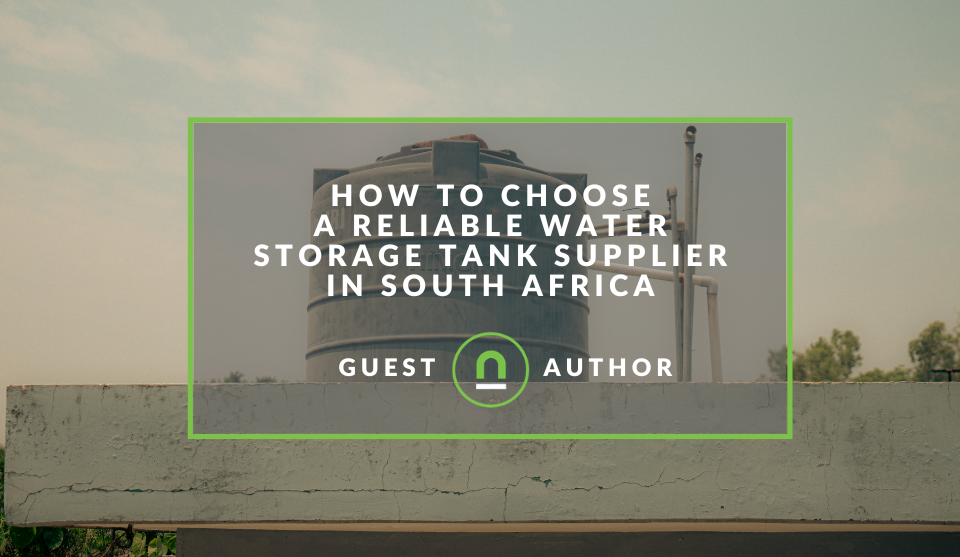
How to Choose a Reliable Water Storage Tank Supplier in South Africa
24 September 2026
nichemarket Advice
How LLM Tracking Tools Are Degrading Google and Bing Data
20 September 2026

Hit the Road
Your eSIM says "Installed", but you still have no internet.
19 September 2026

Money Talks
What South Africa's Latest Financial Pressure Data Tells Us About Household Debt
16 September 2026
Popular posts
Extravaganza
Trending Music Hashtags To Get Your Posts Noticed
24 August 2018
Geek Chic
How To Fix iPhone/iPad Only Charging In Certain Positions
05 July 2020
Extravaganza
Trending Wedding Hashtags To Get Your Posts Noticed
18 September 2018
Money Talks
How To Find Coupons & Vouchers Online In South Africa
28 March 2019
How to Choose a Reliable Water Storage Tank Supplier in South Africa
24 September 2026 | 0 comments | Posted by Jasper Stewart in Constructive Criticism
Whether you run a home, a farm, or a commercial enterprise in South Africa, securing a dependable water supply is now urgent. Increasing climate variability, frequent municipal water supply disruptions, and lingering infrastructure challenges mean that having a dedicated water storage system is no longer just a luxury—it is a vital safeguard.
A suitable water storage tank offers many long-term benefits, from improving everyday water efficiency and capturing free rainwater to providing a seamless, pressurised backup solution during unexpected municipal outages or severe drought conditions.
However, the performance, longevity, and safety of your water storage setup depend almost entirely on the quality of the unit you purchase and the professional standards of the company supplying it. Choosing a reputable water storage tank supplier is the foundational step in this journey.
Your supplier choice will directly affect every aspect of your investment, including product durability, compliance with local health regulations, overall pricing, installation guidance, and long-term warranty coverage.
Some of the Top Factors to Consider
One of the first major technical decisions you will face is selecting the construction material for your storage tank. Reliable suppliers offer a range of material options and clearly explain the advantages and trade-offs of each based on your location, environment, and intended application.
Polyethene (Plastic / LLDPE) Tanks
Polyethene (poly) tanks are by far the most popular choice across South African residential and agricultural sectors due to their cost-effectiveness, lightweight nature, and exceptional corrosion resistance. When purchasing a poly tank, ensure your supplier uses food-grade, Linear Low-Density Polyethene (LLDPE) that is explicitly certified safe for potable (drinking) water storage.
Furthermore, given South Africa's intense UV climate, a high-quality poly tank must feature robust UV-stabilisation treatments (typically UV8 or higher ratings) to prevent the plastic from degrading, cracking, or becoming brittle over time. A superior supplier will also offer multi-layer wall construction—such as an opaque black or dark inner lining designed to block sunlight penetration and prevent algae growth in the stored water.
Steel and Sectional Steel Tanks
For commercial, industrial, large agricultural, or high-capacity residential applications, steel tanks—ranging from corrugated galvanised steel to modular sectional steel tanks—provide unmatched strength and structural longevity. Steel tanks can withstand harsh environmental conditions, extreme temperature fluctuations, and severe physical impacts far better than unreinforced plastics.
Modern high-end steel tanks feature internal, heavy-duty, food-grade flexible liners that completely separate the stored liquid from the metal frame, effectively eliminating corrosion risks and simplifying internal maintenance.
Reliable steel tank suppliers will provide engineered calculations, fire-resistance ratings, and custom colour finishes to suit architectural guidelines.
Water is a precious basic necessity, so choosing both your tank and its manufacturer requires thorough research. Before committing to a supplier, carefully evaluate key operational and technical factors to ensure you choose a partner that meets your specific water storage needs.
The Options Available
A top-tier supplier should carry an extensive range of shapes, sizes, and configurations rather than a one-size-fits-all inventory. Look for suppliers offering vertical standing tanks, low-profile horizontal tanks, slimline space-saving designs for tight suburban alleys, underground storage solutions, and specialised agricultural liquid transport tanks.
A diverse inventory ensures you can choose a product engineered for your specific spatial and functional needs.
Sizing and Capacity Considerations
Choosing the appropriate tank capacity requires careful calculation of your household or facility's daily consumption, combined with the expected duration of potential municipal interruptions or rainwater collection cycles.
In South Africa, average daily domestic water consumption is estimated at 150 to 250 litres per person per day for full household use (including cooking, sanitation, cleaning, and laundry). For basic emergency backup systems designed strictly for essential indoor use (drinking, cooking, basic hygiene), a family of four typically needs a minimum backup reserve of 2,500 to 5,000 litres to comfortably cover a 3- to 7-day municipal outage.
For rainwater harvesting installations, sizing calculations must account for your property's roof footprint area (square metres) and historical local rainfall patterns (millimetres per annum). An experienced supplier will help you apply these sizing formulas to avoid under-sizing your system or over-investing in unnecessary capacity.
Cost of the Water Storage Tank
While budget constraints matter, evaluating a tank purchase based solely on the lowest initial price tag is a common pitfall.
Lower-priced tanks often sacrifice wall thickness, UV stabilisation quality, or virgin resin standards, leading to premature structural failure or water contamination. Compare comprehensive quotes across multiple suppliers, and account for wall thickness grade (standard duty vs heavy duty/chemical duty), included fittings, delivery fees, and warranty terms to gauge true value for money.
Whether you are purchasing a tank for your home or business, you need to ensure you get quality at a competitive price.
Reputation of the Company
Partnering with an established supplier is crucial for ensuring product safety and long-term serviceability. Investigate how long the supplier has operated in the South African market and verify whether their products conform to official quality standards, such as the South African Bureau of Standards (SABS).
Browse online reviews, client testimonials, and industry ratings to gain direct insight into product reliability, delivery punctuality, and responsiveness in resolving customer grievances.
Essential Questions to Ask Prospective Suppliers
To vet potential suppliers thoroughly, ask the following direct technical and operational questions before placing an order or signing a contract:
- Are your tanks manufactured from 100% virgin food-grade materials? (Recycled plastics should never be used for potable water contact layers).
- What UV-protection rating is integrated into the polymer matrix? (Ensure it is rated for harsh, high-sunlight African environments).
- What specific fittings, strainers, and inspection lids are included standard? (Confirm thread sizes, brass inserts, and leaf-vane mesh specifications).
- Does the warranty explicitly cover full outdoor exposure and standing water pressure? (Check for fine print exclusions regarding installation practices).
Do you provide or recommend certified local installation contractors? (Improper third-party installation is the primary cause of voided warranties).
Support, Warranty, and After-Sales
Another critical factor to evaluate is the supplier's ongoing customer care and after-sales support. Reliable manufacturers stand behind their craftsmanship with long-term warranties (typically 8 to 10 years for quality poly tanks and 10 to 20 years for engineered steel systems). Review warranty agreements to ensure they cover material defects and UV degradation.
Furthermore, check whether the supplier stocks spare parts—such as replacement lids, overflow strainers, brass valves, and seal gaskets—so you can easily maintain and repair your system over its operating lifecycle.
Installation and Site Preparation Requirements
Even the highest-quality water storage tank will fail prematurely if placed on an inadequate or improper foundation. Water is extremely heavy; one litre equals one kilogram, so a filled 5,000-litre tank weighs over five metric tons. A trustworthy supplier will provide clear, written base-preparation guidelines to protect your installation.
Key installation and site requirements include:
- Smooth, Level Concrete Slab: The gold standard for vertical tanks is a smooth, level concrete base at least 100mm to 150mm thick, reinforced with steel mesh, extending beyond the tank base dimensions.
- Compacted Crusher Dust / Sand Ring-Beams: If concrete is unfeasible, a perfectly flat, well-compacted crusher dust or sand bed contained within a rigid brick or steel retaining ring can be used, ensuring no sharp stones or debris protrude.
- Prohibition of Unsuitable Surfaces: Never set tanks directly on uncompacted soil, wooden pallets, loose bricks, or uneven pavers, as localised settling will distort the base and rupture the wall structure under load.
- Flexible Plumbing Connections: All pipe connections attached to the tank outlets must feature flexible couplings or hose sections to absorb natural expansion, contraction, and slight structural settling without snapping the tank fittings.
Delivery Logistics across South Africa
Given the physical bulk of water storage tanks, transport and delivery logistics present significant challenges in South Africa. When choosing a supplier, verify their geographic delivery network and logistical capabilities.
Top suppliers maintain nationwide distribution depots across major provinces (Gauteng, Western Cape, KwaZulu-Natal, Eastern Cape, etc.) or operate specialised flatbed transport fleets equipped with integrated offloading cranes or trained delivery crews.
Before placing your order, clarify site access limitations with the supplier, such as narrow residential gates, overhead power lines, panhandle driveways, or unpaved rural roads. Understanding delivery protocols prevents costly drop-off delays or unexpected offloading surcharges.
Buy Your Water Storage Tank with Confidence
After considering these factors, you can buy your water storage tank with greater confidence. By finding the right supplier, you can also expect better quality, affordability, and service.
Tell us your story
Would you like to write for nichemarket just like Jasper has? Find out how to submit a guest post, and when you're ready, you can contact us.
Are you looking to promote your business?
Construction or renovation businesses can create their free business listing on nichemarket. The more information you provide about your business, the easier it will be for your customers to find you online.
Registering with nichemarket is easy; just head to our sign-up form and follow the instructions. If you need a more detailed guide on creating your profile or listing, we recommend checking out the following articles.
Tags: Water Storage, Guest Post
You might also like
How LLM Tracking Tools Are Degrading Google and Bing Data
20 September 2026
Posted by Che Kohler in nichemarket Advice
Third party LLM tracking tools are spamming search console reports with fan out queries that do not provde much value to webmasters and SEOs reviewin...
Read more
What Zero Commission Means for DXY Traders on Exness Pro Account
10 September 2026
Posted by Joana Borges in Money Talks
Zero commission on the Exness Pro Account means you pay no extra per-lot fee when you open or close a DXY (US Dollar Index) trade. Here is how it wor...
Read more
{{comment.sUserName}}
{{comment.iDayLastEdit}} day ago
{{comment.iDayLastEdit}} days ago