 News Home
 {{blogcategory.sCategoryName}}
Recent posts
Money Talks
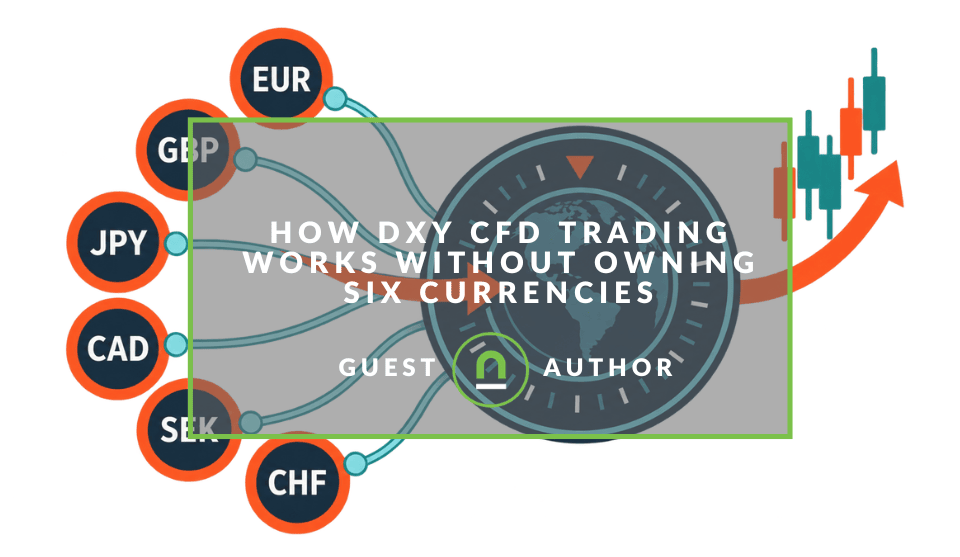
How DXY CFD Trading Works Without Owning Six Currencies
28 September 2026
nichemarket Advice
What Is Google's Preferred Source Button?
27 September 2026

Constructive Criticism
How to Choose a Reliable Water Storage Tank Supplier in South Africa
24 September 2026
nichemarket Advice
How LLM Tracking Tools Are Degrading Google and Bing Data
20 September 2026
Popular posts
Extravaganza
Trending Music Hashtags To Get Your Posts Noticed
24 August 2018
Geek Chic
How To Fix iPhone/iPad Only Charging In Certain Positions
05 July 2020
Extravaganza
Trending Wedding Hashtags To Get Your Posts Noticed
18 September 2018
Money Talks
How To Find Coupons & Vouchers Online In South Africa
28 March 2019
How Does Margin Really Work on a Commodity Trading Platform?
11 August 2026 | 0 comments | Posted by Daniela Mitchell in Money Talks
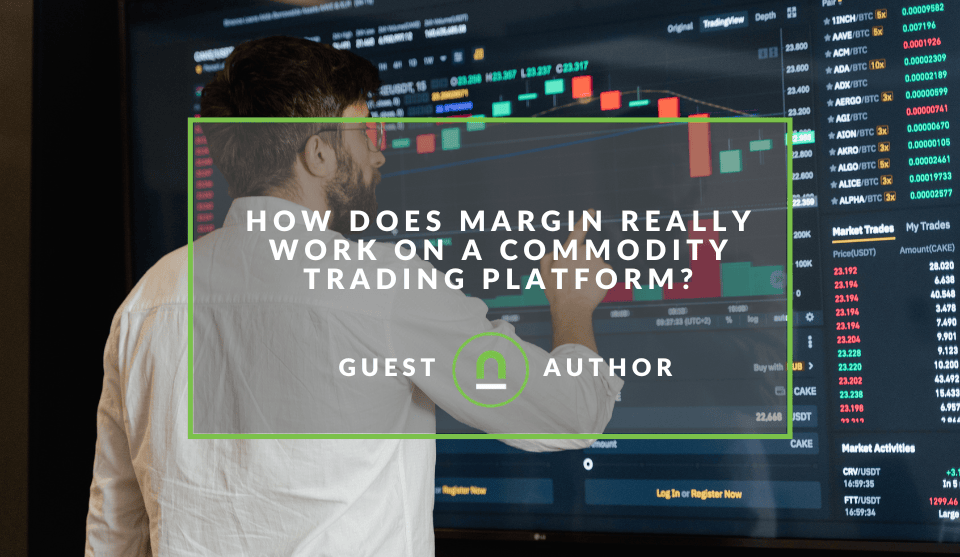
Margin trading allows traders to amplify their exposure to underlying commodities by committing only a portion of their personal capital, with the remaining funds being borrowed from the broker or a third party.
Thanks to margin and leverage, online commodity trading can become more profitable, although using these features carries higher risk.
Margin trading started in the U.S. in the late 19th century and expanded rapidly during the speculative boom of the 1920s. It was used extensively in the stock markets and then became common in commodity trading.
However, not every margin rule is decades old. A new Commodity Futures Trading Commission regulation, published in the Federal Register, phased in through January 2026, now blocks brokers from letting a customer pull funds out of an account if doing so would drop the balance below what's required to hold an open position.
The good news is that there are lighter margin rules for contracts for difference (CFDs), which are more flexible than futures and have lower entry barriers for beginners.
Let’s see how margin really works and how it differs across commodity trading products and other asset classes.
What Is Margin in Commodity Trading?
The basic concept of margin trading is simple: a trader is required to commit a percentage of the total order value. This commitment is called margin, and it goes hand in hand with leverage. To put it differently, margin trading accounts enable leveraged trading.
Leverage represents the ratio between the total position value and the trader's own capital. For example, if you want to buy $10,000 worth of gold using 10:1 leverage, you would be required to invest only $1,000 of your own funds. The remaining $9,000 is covered from borrowed funds.
This feature increases potential returns, but it also magnifies losses. If the gold price moves against your position and your balance drops below the required maintenance margin, the broker will warn you through a margin call or close the position automatically.
Initial Margin vs Maintenance Margin
Commodity trading operates with two main types of margin: initial margin and maintenance margin.
Initial margin is the minimum capital that you need to open a new position. This becomes clear when you choose the leverage figure. For example, 5:1 leverage requires 20% of initial margin.
Once the position is open, traders must keep a minimum account balance known as maintenance margin. In commodity trading, it is usually set at 70% to 90% of the initial margin level, being monitored continuously. If the pending losses reduce the account below the maintenance margin, the platform may issue a margin call after which you can add more funds. Otherwise, positions can be closed automatically with a loss.
How Margin Works on Commodity Futures
Instead of paying the full contract value, traders can use margin to deposit only the initial margin, which is determined by the exchange and depends on the commodity.
It’s worth noting that unlike stock or Forex margin, where you borrow money to open larger positions, futures margin serves as collateral that makes sure you can fulfill your contract obligations, effectively acting as a good-faith performance bond.
Futures margin may represent 3% to 20% of the notional value of the contract. These figures depend on the broker and may change.
For example, at the beginning of 2026, CME Group raised initial and maintenance margins for COMEX 100 Gold Futures from 8% to 9%, while initial and maintenance margins for COMEX 5000 Silver Futures were raised to 18% from 15%.
It’s important to stress that margin accounts are subject to daily mark-to-market settlements, where profits and losses are added or deducted at the end of each trading day.
How Margin Works in Commodity CFDs
Commodity CFDs also support margin, and the process is much simpler than in futures markets.
As a rule, margin requirements are set by the broker, and the process is pretty much the same as with Forex and stock CFDs. Margin figures represent a percentage of the total position size.
Brokers usually offer up to 20:1 leverage for commodities, versus up to 500:1 for Forex pairs.
The great thing about CFDs is that they eliminate contract expiration or physical delivery, making them more accessible.
Commodity Margin vs. Forex vs. Stocks
Commodity margin differs from Forex and stock margin.
Forex pairs generally offer the highest leverage because they are less volatile and more liquid. For example, the highest leverage ratios range between 100:1 and 1000:1.
Stocks and stock CFDs require higher margins, usually up to 50%.
Commodities usually fall somewhere in between, with most CFD brokers offering up to 20:1 leverage.
Common Margin Trading Mistakes
Commodity traders can misuse leverage. Here are some of the most common mistakes to avoid:
- Using maximum leverage: Just because a broker offers 20:1 leverage doesn't mean you should use it.
- Opening too many leveraged trades: Multiple leveraged positions means taking more risk.
- Ignoring stop-loss orders: Many commodities, such as oil, are highly volatile, and losses can escalate quickly if you don’t set stop losses.
Traders should implement risk management practices and use margin wisely to reduce losses and amplify profits.
Want to see your writing here?
We're always open to fresh voices and new perspectives. Learn how to submit a guest post, then reach out to our team when you're ready to pitch.
Get your business found online
Did you know you can list your business on nichemarket for free? A complete, detailed listing makes it far easier for potential customers to discover you.
Not sure where to start? These guides will walk you through it:
More like this:
Liked what you read? Here are a few more posts on trading worth checking out:
- Maximising Business and Trading Opportunities Through Smart Online Strategies
- A Guide To Mobile Trading Apps for South Africans
- Advanced Fintech And NeoBanks Software Development Solutions
- How to Choose the Best Copy Trading Platforms for Maximum Return
Tags: commodity trading, margin trading, leverage trading, futures trading, trading risk management
You might also like
How LLM Tracking Tools Are Degrading Google and Bing Data
20 September 2026
Posted by Che Kohler in nichemarket Advice
Third party LLM tracking tools are spamming search console reports with fan out queries that do not provde much value to webmasters and SEOs reviewin...
Read moreHow DXY CFD Trading Works Without Owning Six Currencies
28 September 2026
Posted by Joana Borges in Money Talks
Learn how DXY CFD trading works, what moves the US Dollar Index, and how one position replaces six currency trades, plus costs and risks.
Read more
{{comment.sUserName}}
{{comment.iDayLastEdit}} day ago
{{comment.iDayLastEdit}} days ago