 News Home
 {{blogcategory.sCategoryName}}
Recent posts
Beauty Basics
How to Choose Tretinoin Strength for Acne, Dark Spots and Wrinkles?
14 August 2026

Money Talks
How Does Margin Really Work on a Commodity Trading Platform?
11 August 2026

Money Talks
How Ramaphosa's Foreign Policy Impacts South Africa's Economy
06 August 2026

Press Releases
As Bank Loan Rejection Rates Soar to 80%, Pawn My Car Offers South Africans a Fast, Credit-Free Alternative
29 July 2026
Popular posts
Extravaganza
Trending Music Hashtags To Get Your Posts Noticed
24 August 2018
Geek Chic
How To Fix iPhone/iPad Only Charging In Certain Positions
05 July 2020
Extravaganza
Trending Wedding Hashtags To Get Your Posts Noticed
18 September 2018
Money Talks
How To Find Coupons & Vouchers Online In South Africa
28 March 2019
Tretinoin Cream 0.025% vs 0.05% vs 0.1% South Africa Guide
15 May 2026 | 0 comments | Posted by Mirza Shafique in Beauty Basics
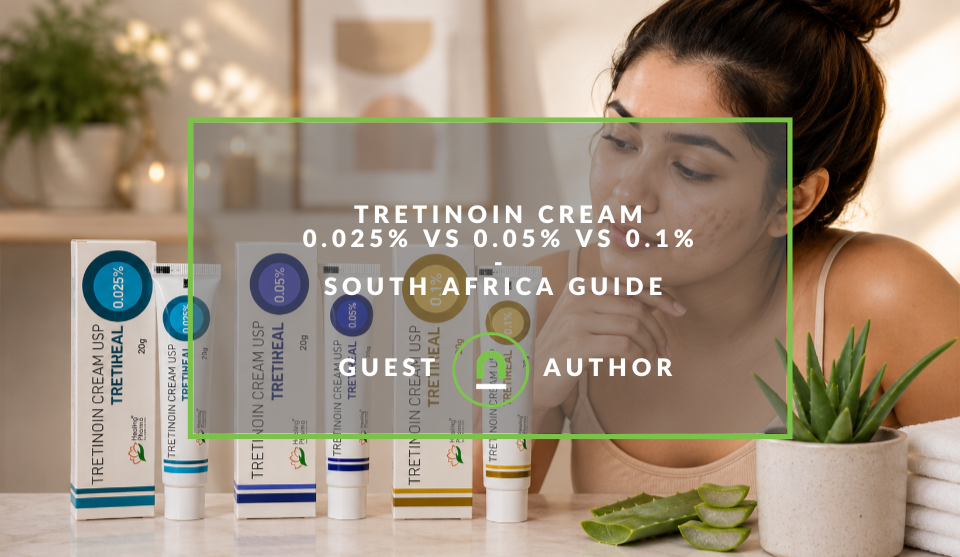
Choosing between tretinoin cream 0.025%, 0.05%, and 0.1% can feel confusing, especially for first-time users in South Africa. Many people assume the highest strength automatically gives the best results. In reality, skin tolerance matters more than intensity alone.
The difference between these strengths affects dryness, peeling, redness, and long-term comfort. A stronger formula may work faster in early weeks, but stronger irritation can also interrupt routines. When skin becomes overwhelmed, people often stop using tretinoin completely.
According to the American Academy of Dermatology, consistent long-term tretinoin use often matters more than using the highest strength available. Skin responds best when renewal stays controlled, and the barrier remains stable. This guide explains how tretinoin 0.025%, 0.05%, and 0.1% compared for acne, wrinkles, pigmentation, skin texture, and long-term use.
Tretinoin Cream 0.025% vs 0.05% vs 0.1% Comparison Table
This comparison helps you understand how each strength works for acne, wrinkles, pigmentation, and skin tolerance. It also makes choosing the right option from the Tretinoin Cream collection easier based on your skin type.
Factor | 0.025% | 0.05% | 0.1% |
Strength Level | Mild | Moderate | Highest |
Best For | Beginners | Most users | Advanced users |
Acne | Mild acne | Moderate acne | Severe acne |
Wrinkles | Early fine lines | Moderate wrinkles | Deep wrinkles |
Pigmentation | Sensitive skin pigmentation | Moderate uneven tone | Resistant discoloration |
Dryness | Mild | Moderate | Significant |
Peeling | Mild | Moderate | Frequent |
Redness | Lower risk | Moderate risk | Higher risk |
Barrier Stress | Lower | Balanced | High |
Skin Renewal Speed | Gradual | Steady | Fastest |
Long Term Results | Effective | Effective | Comparable long-term |
Tolerance Needed | Low | Moderate | High |
How Tretinoin Works Inside the Skin
All three strengths contain all trans retinoic acid. This active form works directly inside skin cells by binding to retinoic acid receptors. Once applied, tretinoin accelerates skin cell turnover. Old cells shed faster while newer cells move upward more quickly. This process helps unclog pores, smooth texture, and improve uneven tone.
Collagen production also increases gradually over time. Consistent use supports firmer skin and softens visible wrinkles. Pigmentation improves as damaged surface cells are replaced more evenly.
The real difference between 0.025%, 0.05%, and 0.1% is intensity. The biological pathway stays the same. Higher concentration simply pushes the renewal process harder. Based on our findings, collagen stimulation does not increase in a perfectly straight line with stronger percentages.
After receptor activity reaches a certain point, extra concentration mainly increases dryness and irritation rather than dramatically improving long-term results. Research published through the National Library of Medicine explains that tretinoin works by binding to retinoic acid receptors and increasing skin cell turnover and collagen stimulation.
Tretinoin 0.025%: Best for Beginners and Sensitive Skin
Tretinoin 0.025% is the gentlest commonly used strength. It suits beginners, sensitive skin, and users who struggle with irritation.
This strength helps improve:
- Mild acne
- Early texture concerns
- Fine lines
- Mild pigmentation
- Uneven tone
The lower concentration makes adjustment easier. Cleveland Clinic notes that lower tretinoin strengths are often easier for beginners and sensitive skin to tolerate during the adjustment phase. Peeling, redness, and dryness usually remain more manageable compared to stronger strengths.
People with reactive skin often tolerate 0.025% more comfortably. This allows more regular use without frequent breaks. We found that many users achieve steady long-term progress simply because they can stay consistent with this strength.
Tretinoin 0.05%: The Balanced Middle Strength
Tretinoin 0.05% is often considered the most balanced option. The American Academy of Dermatology states that moderate tretinoin strengths can improve acne, wrinkles, and uneven skin tone while reducing the risk of severe irritation. It provides stronger renewal than 0.025% while remaining manageable for many skin types.
This strength works well for:
- Moderate acne
- Fine lines and wrinkles
- Moderate pigmentation
- Uneven texture
- Early photoaging
Collagen stimulation becomes more noticeable at this level. Skin often looks smoother and firmer over time.
0.05% usually work for:
- Combination skin
- Normal skin
- Mildly oily skin
- Resilient dry skin with proper moisturising
Tretinoin 0.1%: Highest Strength and Highest Irritation Risk
Tretinoin 0.1% is the strongest commonly used topical strength. It delivers the most aggressive skin renewal intensity.
This strength is generally considered for:
- Severe acne
- Deep wrinkles
- Heavy sun damage
- Resistant skin concerns
Early peeling and dryness often appear more quickly at 0.1%. Redness and barrier stress also increase significantly. Dermatology research available through PubMed shows that higher tretinoin strengths may increase irritation faster than they improve long-term results.
0.1% usually requires:
- Strong skin tolerance
- Careful frequency control
- Consistent moisturising
- Daily sunscreen use
Based on our findings, this strength is not necessary for most users. Many people achieve similar long-term results with 0.05% while experiencing fewer interruptions from irritation.
Results: Speed vs Long-Term Consistency
Many people focus only on how fast tretinoin works. The more important factor is whether the routine remains sustainable for months. 0.1% may trigger faster visible peeling and quicker texture changes in early weeks. However, stronger irritation often leads to skipped applications and recovery breaks.
0.025% works more gradually but usually causes fewer setbacks, where 0.05% often sits in the middle by balancing speed and comfort. According to dermatologist-reviewed skincare studies, long-term consistency and barrier stability strongly influence tretinoin outcomes over time.
When the barrier remains stable:
- Acne control improves steadily
- Pigmentation fades more evenly
- Collagen support continues consistently
- Skin texture improves with less interruption
Which Strength Is Better for Acne?
Mild Acne
0.025% often works well for mild acne and clogged pores. It supports gradual renewal without excessive dryness.
Moderate Acne
0.05% usually provides stronger pore unclogging and better oil regulation for moderate breakouts.
Severe or Resistant Acne
0.1% may suit severe acne when lower strengths no longer provide enough improvement.
Which Strength Is Better for Wrinkles?
Wrinkle improvement takes time regardless of strength.
- 0.025% supports early fine lines
- 0.05% works well for moderate wrinkles
- 0.1% may help deeper etched lines
Collagen stimulation increases gradually over months, not days.
Which Strength Is Better for Hyperpigmentation?
Pigmentation responds slowly to tretinoin. Strength alone does not decide results.
- 0.025% often suits sensitive skin dealing with dark marks
- 0.05% may improve uneven tone faster once tolerance develops
- 0.1% increases irritation risk, which may worsen post-inflammatory pigmentation in some skin types
In South Africa, sun exposure strongly affects pigmentation outcomes. Daily sunscreen use matters more than increasing strength aggressively. The American Academy of Dermatology highlights that sunscreen use is essential during tretinoin treatment because UV exposure can worsen pigmentation and irritation.
Cream vs Gel: Which Texture Works Better?
Tretinoin comes in both cream and gel forms.
Cream
- Better for dry skin
- More moisturising
- Helps reduce tightness
- Often easier to tolerate
Gel
- Better for oily skin
- Feels lighter
- Absorbs faster
- Can feel more drying
Gel formulas may feel stronger at the same percentage because absorption happens faster.
How to Start Tretinoin Safely
Starting slowly helps reduce irritation and improves long term consistency.
Beginner Frequency Guide
- Weeks 1 to 2 → Use 2 to 3 nights weekly
- Weeks 3 to 4 → Move to every other night if stable
- After week 4 → Increase gradually only if irritation remains mild
Pea-Sized Amount Rule
Using more products does not improve results faster.
- Use one pea sized amount for the entire face
- Apply thinly on dry skin
- Avoid eyes, lips, and corners of the nose
Moisturiser Support
Barrier support reduces dryness and peeling.
- Apply moisturiser regularly
- Keep routines simple
- Avoid harsh scrubs and strong acids early on
Side Effects Comparison
All strengths may cause similar side effects. The difference is severity. Cleveland Clinic explains that common tretinoin side effects include dryness, peeling, redness, and temporary sensitivity during early use.
Common Reactions
- Dryness
- Peeling
- Tightness
- Mild redness
- Increased sensitivity
Higher Strength Risks
0.1% increases:
- Barrier stress
- Persistent peeling
- Strong redness
- Product sensitivity
Pregnancy and Safety Note
Tretinoin should be avoided during pregnancy and while planning pregnancy. This precaution applies to all strengths equally because they contain the same active ingredient.
Note: NHS guidance recommends avoiding topical retinoids during pregnancy as a safety precaution.
When Should You Move Up in Strength?
Increasing strength only makes sense after the skin adapts fully.
Signs You May Move Up
- Minimal redness
- Stable barrier
- Comfortable regular use
- Progress slowing after months of consistency
Signs You Should Stay Lower
- Ongoing stinging
- Frequent peeling
- Barrier tightness
- Repeated recovery breaks
Decision Guide: Which Strength Should You Choose?
- New to tretinoin → Start with 0.025%
- Moderate acne or wrinkles → Consider 0.05%
- Severe acne or deep wrinkles → 0.1% may suit
- Sensitive skin → Lower strengths work better
- Strong irritation → Reduce frequency or lower strength
- Long-term maintenance → 0.05% is often enough
Our analysis shows that the best strength is usually the one your skin can maintain consistently without ongoing inflammation.
Frequently Asked Questions
Is tretinoin 0.025% strong enough?
Yes. Many users see improvement in acne, texture, and early wrinkles with consistent use.
Is tretinoin 0.05% stronger than 0.025%?
Yes. It delivers more active ingredients per application and increases renewal intensity.
Is tretinoin 0.1% too strong for most people?
For many users, yes. It increases dryness and peeling significantly compared to lower strengths.
Which strength works fastest?
0.1% usually creates the fastest visible turnover, but it also causes the most irritation.
Which strength is best for beginners?
0.025% is usually the easiest starting point for beginners and sensitive skin.
Do stronger strengths give better long-term results?
Not always. Long-term consistency matters more than maximum intensity.
Which strength is best for wrinkles?
0.05% often balances collagen support and tolerability well for long-term wrinkle improvement.
Can I move from 0.025% to 0.05% later?
Yes. Many users increase strength gradually after building stable tolerance.
Conclusion
Choosing between tretinoin cream 0.025%, 0.05%, and 0.1% depends on skin tolerance, concern severity, and long-term consistency.
- 0.025% suits beginners and sensitive skin.
- 0.05% offers the best balance for many users.
- 0.1% is better reserved for resistant acne or deeper wrinkles when the skin already tolerates stronger renewal.
Stronger does not always mean better. The best results usually come from steady routines, controlled irritation, and long-term barrier stability.
Author Bio
Mirza Shafique is a skincare content writer focused on tretinoin, acne care, hyperpigmentation, anti-ageing, and topical retinoid education for South African readers. His work simplifies complex skincare topics into practical and easy-to-understand guidance focused on skin tolerance, consistency, and long-term results.
Email: contact@tretinoins.co.za
Are you looking to promote your business?
Beauty businesses can create a free business listing on nichemarket. The more information you provide about your business, the easier it will be for your customers to find you online.
Registering with nichemarket is easy; all you will need to do is head over to our sign-up form and follow the instructions. If you require a more detailed guide on how to create your profile or your listing, then we highly recommend you check out the following articles.
Recommended reading
If you enjoyed this post and have time to spare, why not check out these related posts and dive deeper down the rabbit hole that is the beauty treatment.
You might also like
How Ramaphosa's Foreign Policy Impacts South Africa's Economy
06 August 2026
Posted by Debjit Mukherjee in Money Talks
South Africa's foreign policy increasingly intersects with domestic economic priorities. This analysis examines how diplomatic choices influence inve...
Read more
The Complete Guide to Building and Managing a Remote Team
13 July 2026
Posted by Kevin Friend in Talent Agents
Learn how to build and manage a remote team—from choosing the right tools to setting workflows, communication rules, and keeping employees engaged
Read more
{{comment.sUserName}}
{{comment.iDayLastEdit}} day ago
{{comment.iDayLastEdit}} days ago